

Role of Accessories in CPAP Therapy: Maximising Comfort
Finding the right CPAP accessories can feel overwhelming for many British patients shopping online. With over 40% of sleep apnea users reporting discomfort due to poorly chosen equipment, comfort and therapy success often hinge on those smaller components rather than the machine alone. Understanding how masks, tubing, and filters affect sleep quality helps British CPAP users make informed choices that suit their needs and truly improve nightly rest.
Table of Contents
- Defining CPAP Accessories And Common Myths
- Types Of CPAP Accessories And Their Functions
- How Accessories Impact Comfort And Therapy Success
- Hygiene, Maintenance, And Replacement Essentials
- Common Mistakes In CPAP Accessory Selection
Key Takeaways
| Point | Details |
|---|---|
| Importance of Personalisation | CPAP accessories must be tailored to individual needs for effective treatment and comfort. |
| Role of Hygiene and Maintenance | Regular cleaning and timely replacement of accessories are crucial for optimal performance and respiratory health. |
| Impact of Accessory Selection | Appropriate masks and accessories greatly influence therapy adherence and overall sleep quality. |
| Common Selection Mistakes | Many patients fail to choose correctly sized and compatible accessories, compromising their therapy’s success. |
Defining CPAP Accessories and Common Myths
CPAP therapy is a complex treatment involving multiple components beyond just the machine itself. Accessories play a critical role in personalising and optimising sleep apnoea management, ensuring patients receive effective and comfortable treatment throughout the night.
Contrary to popular belief, CPAP accessories are not a one-size-fits-all solution. Different patients require unique combinations of masks, tubes, filters, and humidification systems to achieve optimal comfort and treatment effectiveness. Many individuals mistakenly assume all CPAP machines and accessories are identical, but modern sleep therapy technology offers remarkable customisation options.
Key CPAP accessories typically include:
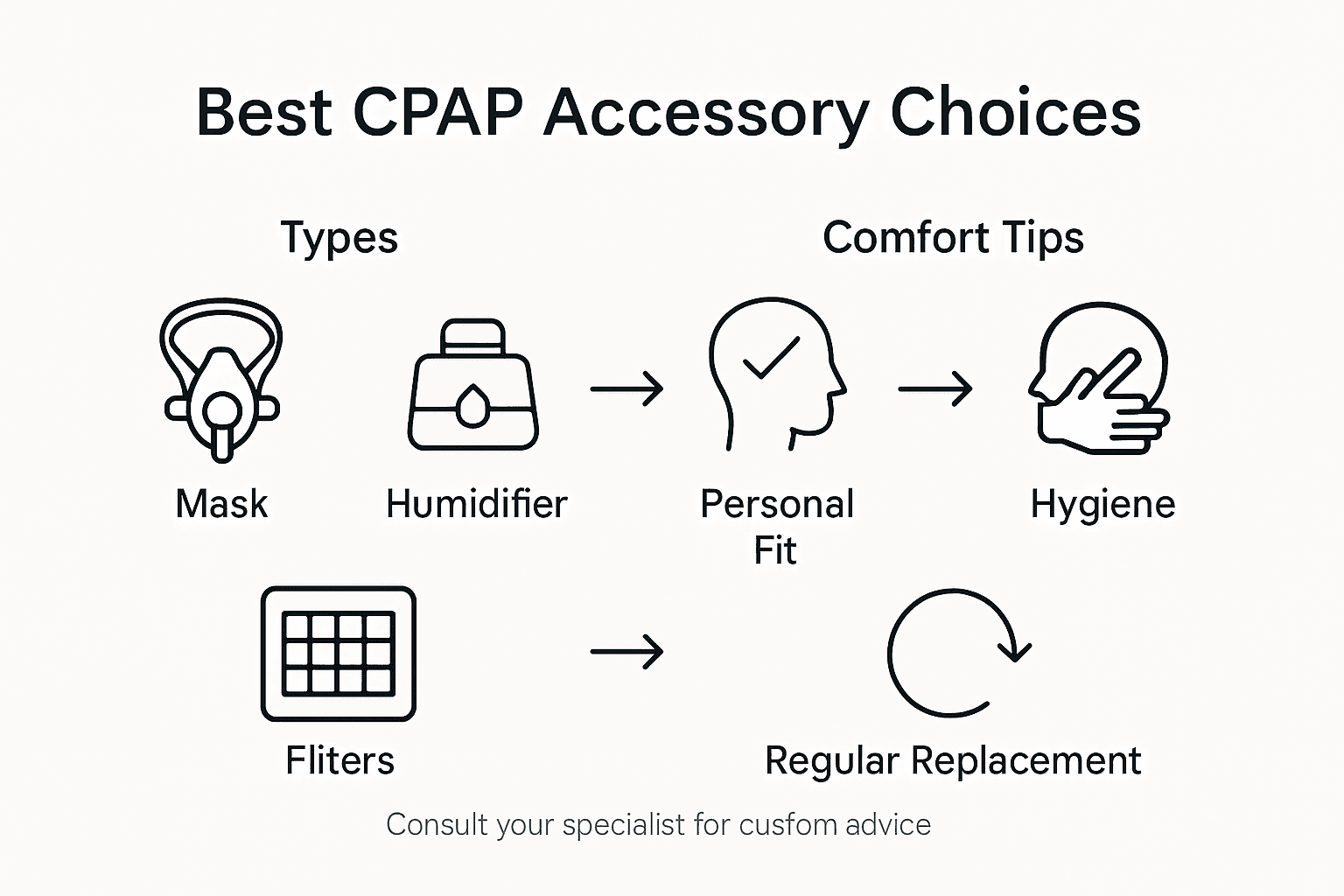
- Masks: Available in multiple designs (nasal, full-face, pillows)
- Humidifiers: Reduce dryness and improve breathing comfort
- Filters: Protect machine performance and air quality
- Tubing: Connects machine to mask, available in various lengths
- Headgear: Provides secure mask positioning
Expert Tip: Select accessories that complement your specific sleep patterns and comfort requirements, rather than choosing based solely on price.
Types of CPAP Accessories and Their Functions
CPAP therapy involves a complex ecosystem of components designed to enhance patient comfort and treatment effectiveness. When selecting accessories, users must understand the specific functions and benefits of each component. The ResMed AirFit F30i Full Face Mask represents an excellent example of how modern mask design can significantly improve user experience.
The primary CPAP accessories can be categorised into several essential groups, each serving a unique purpose in sleep apnoea management:
-
Masks: Core interface between machine and user
- Full-face masks: Cover nose and mouth
- Nasal masks: Cover only nasal area
- Pillow masks: Minimal design with minimal facial contact
-
Humidification Accessories:
- Water chambers: Prevent airway dryness
- Heated tubing: Maintain consistent air temperature
- Moisture exchangers: Reduce condensation
-
Filtration Components:
- Disposable filters: Remove airborne particles
- Reusable filters: Long-term dust and allergen protection
- Ultra-fine filters: Advanced particle elimination
-
Connection and Support Accessories:
- Headgear: Secure mask positioning
- Tubing: Connect machine to mask
- Chinstraps: Prevent mouth breathing
Each accessory plays a critical role in ensuring comfortable and effective continuous positive airway pressure therapy. By understanding these components, patients can personalise their treatment approach and improve overall sleep quality.
Pro Tip: Rotate and replace your CPAP accessories regularly to maintain hygiene and optimal performance, typically every three to six months depending on manufacturer recommendations.
How Accessories Impact Comfort and Therapy Success
Personalised mask fitting and appropriate accessory selection are crucial elements in determining the overall success of continuous positive airway pressure (CPAP) therapy. The comfort and functionality of accessories directly influence patient adherence and long-term treatment outcomes, making them far more than simple supplementary components.
Research highlights several critical ways accessories impact therapy effectiveness. Comfort-related issues like mask discomfort, air leaks, and respiratory dryness represent significant barriers to successful treatment. Patients who experience persistent discomfort are more likely to abandon their therapy, underscoring the importance of carefully selected and well-fitted accessories.
Key factors influencing accessory comfort and therapy success include:
Here is a summary of how different CPAP accessories contribute to therapy comfort and outcomes:
| Accessory Type | Main Benefit | Risk if Not Personalised |
|---|---|---|
| Mask | Enhanced fit and seal | Discomfort, air leaks |
| Humidification | Reduces airway dryness | Nasal congestion, dryness |
| Filtration | Improved air quality | Increased allergens |
| Tubing/Headgear | Stable, quiet operation | Mask slippage, noise |
| Chinstraps | Prevents mouth leaks | Reduced therapy efficacy |
- Mask Fit: Precise sizing and contour matching
- Material Sensitivity: Hypoallergenic and skin-friendly materials
- Adjustability: Customisable straps and support mechanisms
- Breathability: Designs that minimise moisture and heat buildup
- Noise Reduction: Accessories that minimise operational sound
By understanding these elements, patients can transform their CPAP experience from a potentially challenging treatment to a comfortable, sustainable health management strategy.
Pro Tip: Consult a sleep specialist for professional mask fitting and accessory recommendations tailored to your specific physiological needs and comfort preferences.
Hygiene, Maintenance, and Replacement Essentials
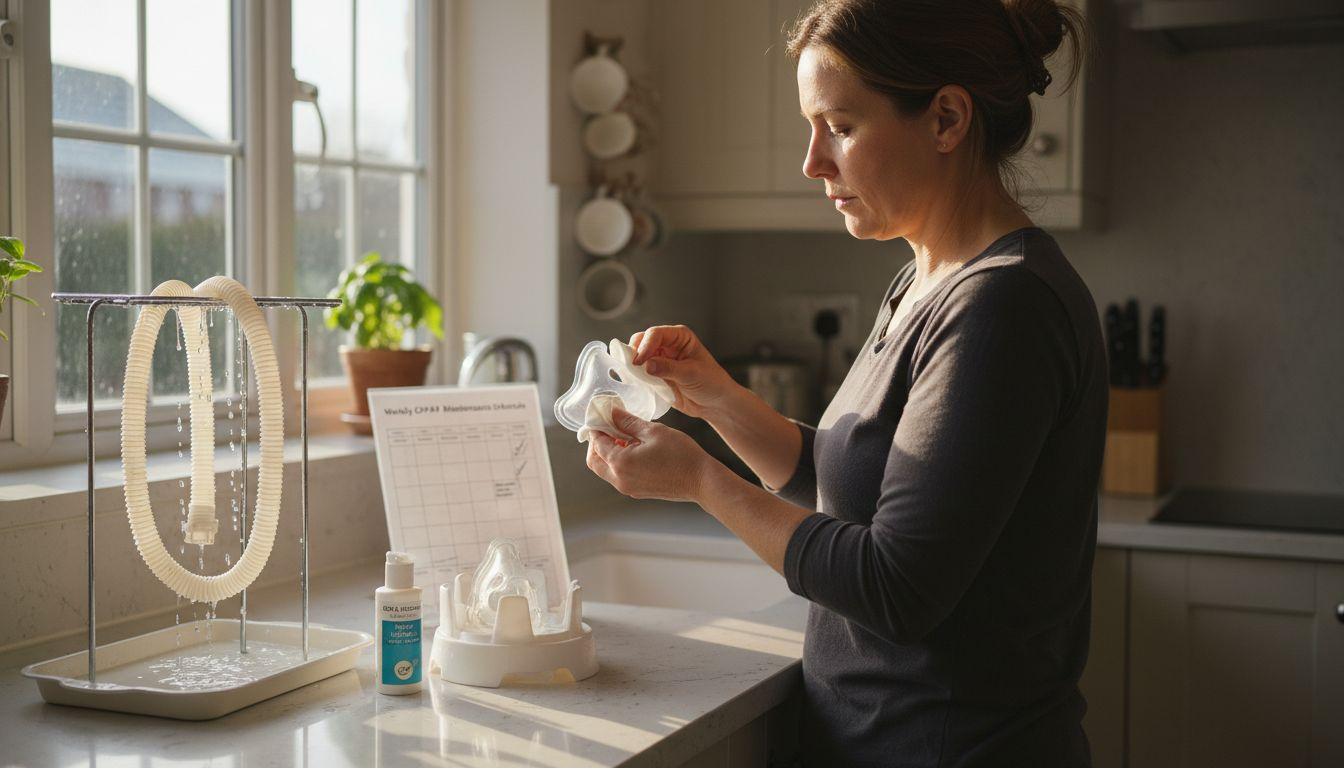
Proper cleaning and maintenance of CPAP equipment are fundamental to ensuring effective and safe sleep apnoea therapy. Regular care prevents bacterial growth, maintains device performance, and protects the user’s respiratory health, making hygiene an essential aspect of CPAP treatment.
Maintenance routines should be comprehensive and systematic, addressing different components with specific cleaning protocols. Daily and weekly cleaning tasks are crucial for preventing potential health risks and maintaining equipment functionality. Users must pay special attention to mask cushions, tubing, and humidification systems, which are prone to moisture accumulation and bacterial colonisation.
Key maintenance guidelines include:
-
Daily Tasks:
- Wipe mask cushion with alcohol-free cleansing wipe
- Air dry mask components
- Empty and rinse water chamber
-
Weekly Tasks:
- Wash tubing with warm soapy water
- Thoroughly rinse and air dry all components
- Inspect for signs of wear or damage
-
Monthly Tasks:
- Deep clean all removable parts
- Check filter conditions
- Evaluate overall equipment integrity
Accessory replacement follows manufacturer recommendations, typically every three to six months for masks, filters, and tubing. This proactive approach ensures optimal therapy performance and minimises potential health complications.
This table highlights essential CPAP hygiene tasks and replacement intervals for key accessories:
| Task Frequency | Items Involved | Purpose |
|---|---|---|
| Daily | Mask cushion, water tank | Remove oils, prevent bacteria |
| Weekly | Tubing, full mask | Deep cleanse, reduce build-up |
| Monthly | Filters, all accessories | Maintain performance, prolong life |
| Every 3–6 months | Mask, tubing, headgear | Avoid wear, ensure reliability |
Pro Tip: Create a dedicated cleaning station with specialised CPAP cleaning supplies to streamline your maintenance routine and maintain consistent hygiene practices.
Common Mistakes in CPAP Accessory Selection
Selecting the wrong mask is one of the most critical errors patients make during CPAP therapy, potentially compromising treatment effectiveness and patient comfort. Understanding these common pitfalls can significantly improve therapy adherence and overall sleep quality.
The primary mistakes in CPAP accessory selection encompass several key areas that directly impact treatment success. Patients often struggle with choosing appropriate accessories due to limited understanding of their individual physiological requirements, leading to suboptimal therapy experiences.
Common selection errors include:
-
Incorrect Mask Sizing:
- Selecting masks without professional fitting
- Ignoring facial structure variations
- Choosing based on price rather than comfort
-
Overlooking Individual Breathing Patterns:
- Selecting masks incompatible with mouth/nose breathing habits
- Neglecting personal comfort preferences
- Failing to consider facial hair or skin sensitivity
-
Inadequate Accessory Customisation:
- Using standard accessories without personalisation
- Disregarding potential allergic reactions
- Not exploring alternative cushion materials
By recognising these common mistakes, patients can make more informed decisions about their CPAP accessories, ultimately improving therapy effectiveness and personal comfort.
Pro Tip: Always request a professional mask fitting and trial period to ensure optimal accessory selection and long-term therapy success.
Elevate Your CPAP Comfort with the Right Accessories
The article highlights the critical role that carefully selected CPAP accessories like masks, humidifiers, and headgear play in maximising comfort and therapy success. If you have struggled with mask discomfort, air leaks, or dryness then these issues can be expertly addressed by choosing the right components tailored to your unique needs. At CPAPSupply.co.uk, you will find a wide range of premium accessories including the ResMed AirFit F30i Full Face Mask designed to improve fit and enhance your overall sleep experience.
Discover solutions that support your therapy journey with components engineered for comfort and performance. Act now to explore our selection and benefit from free shipping on orders over £150 plus next-day delivery across the UK. Don’t let uncomfortable accessories undermine your treatment—visit CPAPSupply.co.uk and take the first step towards a restful night and better health today.
Frequently Asked Questions
What are the essential CPAP accessories for effective therapy?
Key CPAP accessories include masks (full-face, nasal, and pillow types), humidifiers to reduce airway dryness, filters for air quality, tubing for connecting the machine to the mask, and headgear to secure the mask in place.
How do I choose the right CPAP mask for my needs?
To choose the right CPAP mask, consider professional fitting for precise sizing, your breathing patterns (nose or mouth), and preferences for comfort. Trying different styles such as full-face, nasal, or pillow masks can also help find the best fit.
How can accessory selection impact my CPAP therapy success?
Proper accessory selection significantly affects comfort, therapy adherence, and treatment outcomes. Uncomfortable masks, improper humidification, or inadequate filtration can lead to therapy abandonment, making personalised accessory choices crucial for success.
What is the recommended maintenance routine for CPAP accessories?
A recommended maintenance routine includes daily cleaning of the mask cushion, weekly washing of the tubing, and monthly deep cleaning of all parts along with regular replacement of filters and accessories every three to six months, following manufacturer guidelines.